To spread the original, universal and eternal truth, path or law of yoga, which remains forever the same in essence, yet always adapts to the time and place.
|
To spread the original, universal and eternal truth, path or law of yoga, which remains forever the same in essence, yet always adapts to the time and place. |
|
> Indian
Art Galleries > Harish
Johari Painting Tradition > Eastern
and Western Art

Harish Johari on eastern and western art, extracts
of an interview with Louwrien Wijers
The great masters
To me the great masters in the west are as inspired as any great master from the east. So I don't find any difference in their work and in our work. I feel that they are fantastically inspired and they have made such beautiful pieces of art. Like what is his name, the most well known artist here…Rembrandt, and I have seen the work of the person who made the Mona Lisa, what is his name…Leonardo da Vinci, and I also saw the work of Vincent van Gogh and in America where I lived I went to all the museums and saw their collections of all great masters.
When I see their work I feel really inspired and I feel really that I have not done even a fraction of what they have done. They did so much work with so much labour and so much exactness and so much beauty and such beautiful use of colours, that I really feel like adoring them, worshipping them, and feeling how great these persons were. How could they create such great things. So that way I feel that they have the same patience, they have the same emotions. And they use colours and things.
Beyond the senses
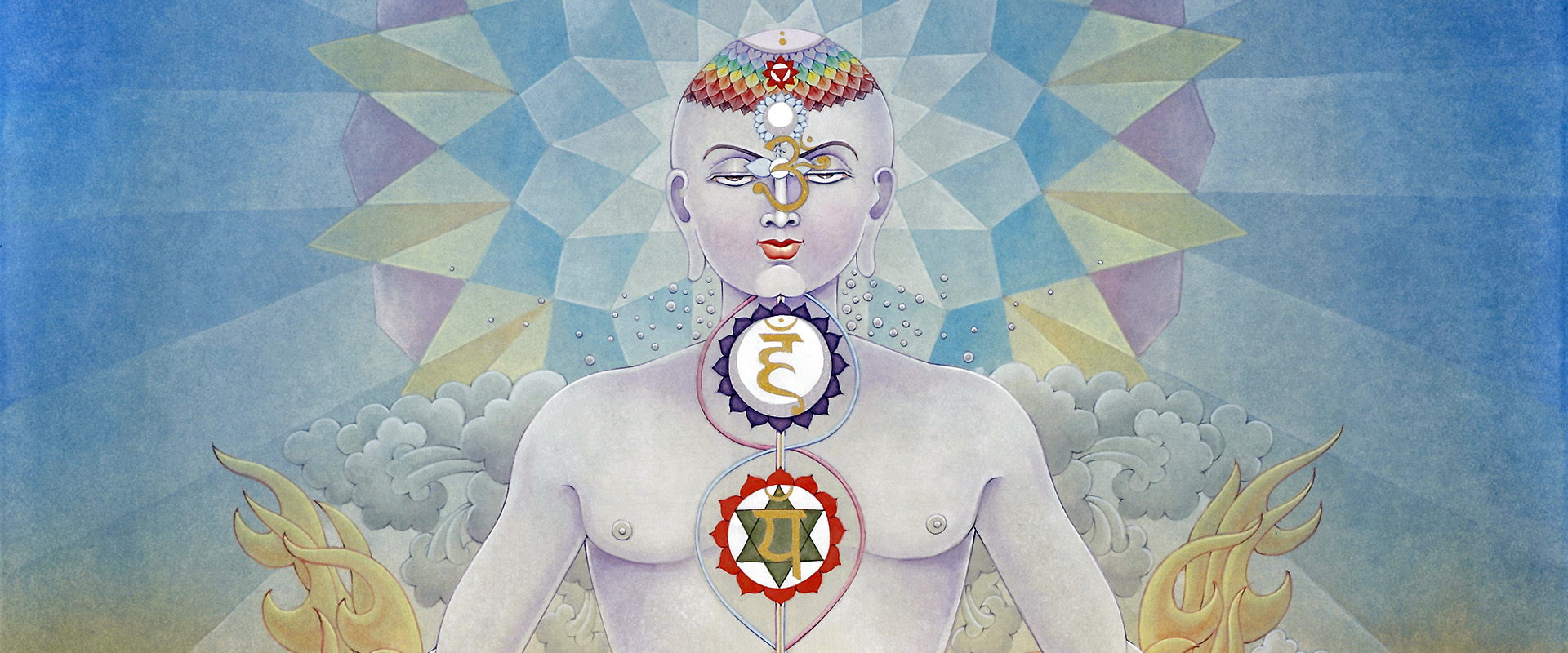
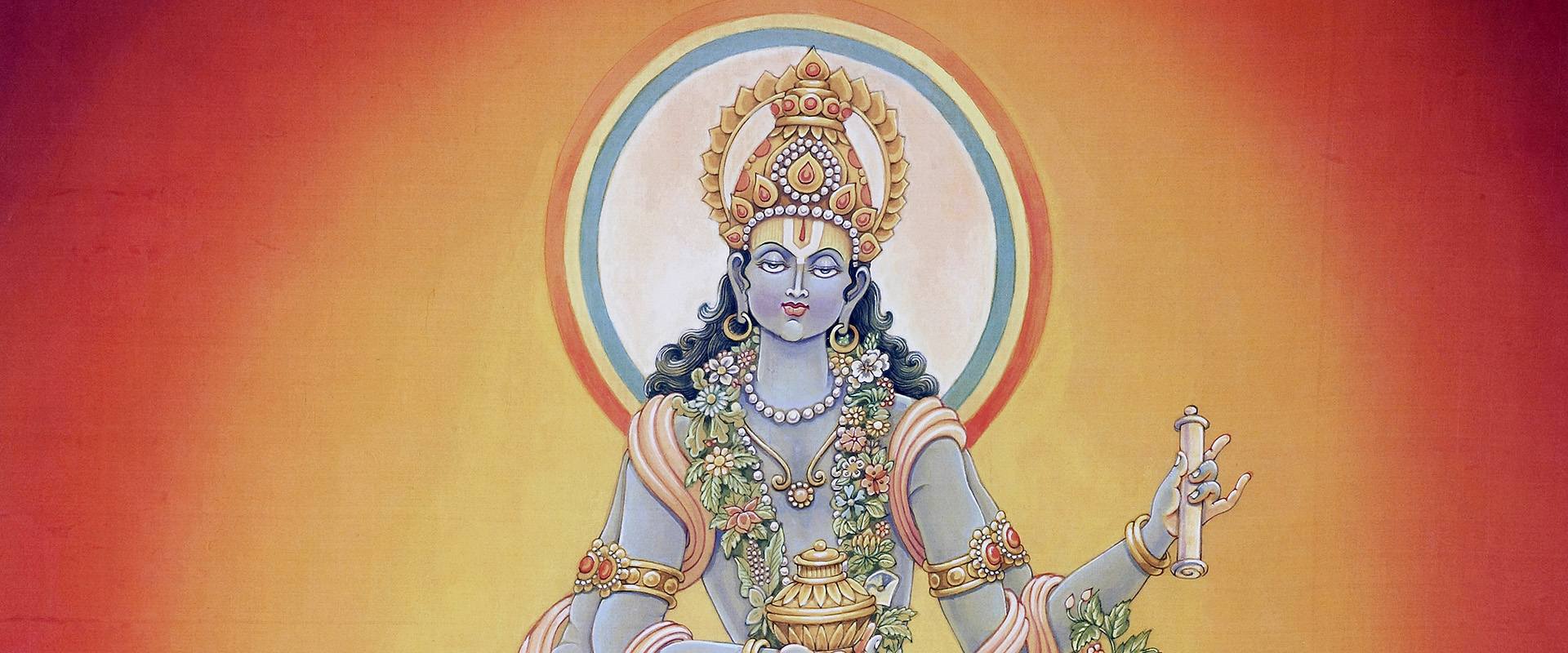
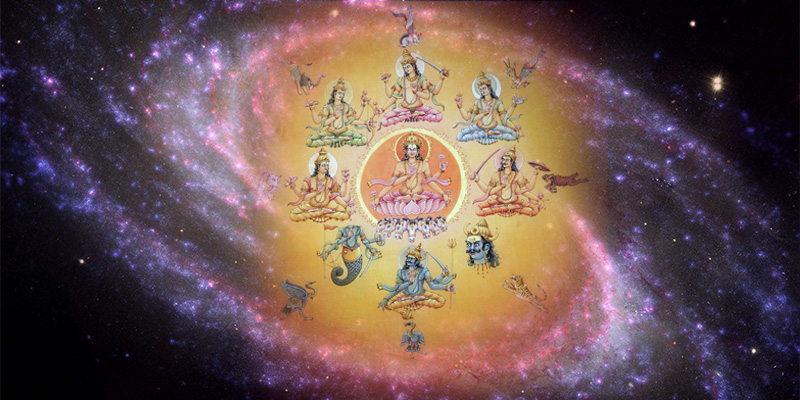
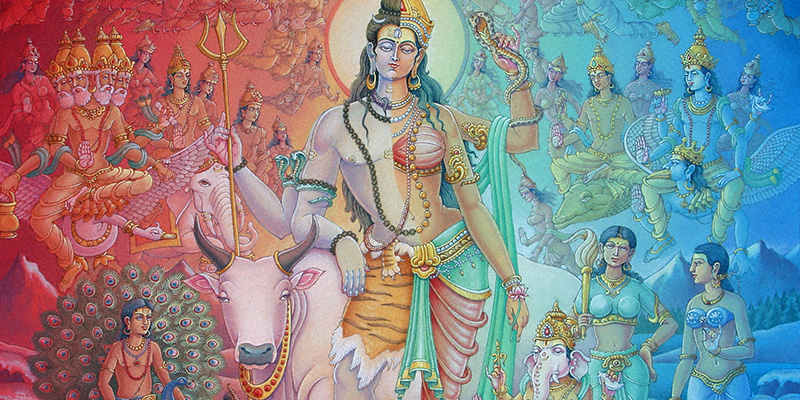
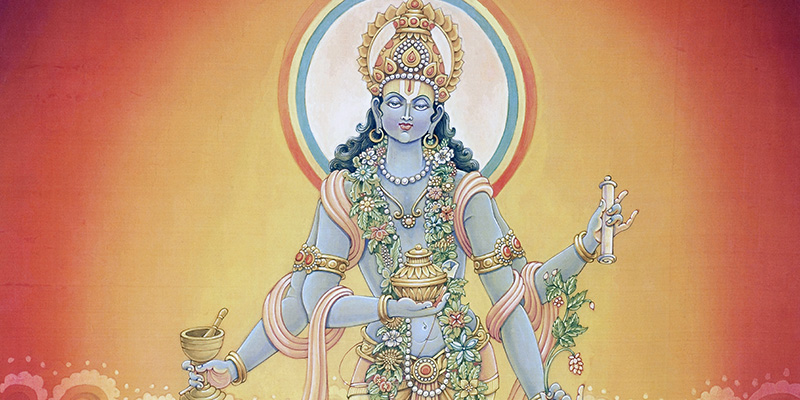
You said: "Our art goes beyond life itself…" And that is something which an artist always tries to do, but the way we do it in the west, we maybe never get really beyond life. Well, if they do it with copying something outside then it is not like a meditation. And then they transcend the age stage and they get very deeply absorbed into what they are doing and then they attain one-pointedness and all the things that one attains in meditation. And that is why in India the art… I am not talking about the modern art, which is coming now, because of all the influences of the western art… but the arts which are still existing in India were actually all portraying religious feelings. And so their art was taking them beyond the real life and was giving them away into a higher sphere of life.
I think that in western art things are very beautiful but the symbols are not really beyond the realm of sense perception. And so it does not take you beyond that, It keeps you in the world and most of the time it is a nice apple on a nice plate or a chair or things like that, which are man-made objects or objects present in nature. They are only portrayed in a very beautiful manner, and very close to nature like a good coloured luxury photograph. But it has not that much of symbolic meaning and communication value and that is why that painting only absorbs you for a particular time and then you lose interest in it and you go to the other thing.
Conceptual art
Conceptual art, which is living art, becoming a model, becoming a painting themselves and not making a painting; not putting out on canvas what you feel but through your action, through your behaviour becoming and living it. Which is a different type as our form of art, but it has also its own things. But this art is working with the consciousness of the people who are there and after the performance is over, it only remains in their mind as memory but we can not show it to the coming generation as to what it was all about. So that is a different form of art and this is a different form of art. This art tells history, and most of the history that is recorded in the world becomes art work, from sculptures, from architecture and from those things which are telling how civilizations were and how people lived and what they thought, rather than recorded history in the form of books, our recorded language form telling about the past history. So art has been forming a purpose of telling history and transferring tradition and carrying out lots of things from the past. So it is a medium that comes from the past and goes into the future and connects the past, future and present. Whereas with conceptual art it lives at the moment and after that moment it disintegrates, it only lives in the memories of people and is no more to be seen, except if you have photographs of that action or a movie of that then you can show what people were doing as they have now video-tapes of it. But that is something very different and also there is limitation. You have to think in the same work of what you are. I can make an engine flying and let the same thing sink deep into the mud, but if I want to show it as a conceptual art form, it will be very difficult. But in paintings it is very easy. I can paint twenty hands and twenty heads and thirty feet. In conceptual art it is very difficult. So there are certain things which are only for painting, certain things only for sculpture, certain things only for movies, certain things only for poetry and in the same way certain things can only be done best in conceptual art, and certain things can only be done best in painting.
Modern art
About the approach of the artist I would say that the approach of the western artist in the past was very much similar to the approach of the artist of the eastern countries; they were all trying to portray the principles of life as told by the religious saints and seers and taught by the religion and the highest philosophies of the world and they were completely following those things and coming out with their own way of reaching people to adopt and understand the philosophy present behind the works of the saints and seers.
But now people have gotten more egoistic and they want to come out with their own individual egos and their knowledge is not as vast and their symbols are not as universal. So they come out with individual platforms and patterns, sometimes though those platforms and patterns have a universal appeal… Equally implicit for all people from all cultures, from all places of the world. And sometimes they have only a certain appeal which is very timely and after a particular time those paintings lose their meaning.
One thing with the new way is fantastic, because you are creating new avenues and you are creating new ways, and you are creating new expressions and new mediums and new manners and new techniques and that is very good. So I think it is also very good.
And this (his own work) is also very good; sometimes for some people to devote their lives and to work steadily, very softly, very gently, very slowly and work on the things which are universal, and which are very much based on human nature and portray human nature in a right way; classical things. So, I think I like both things.
And I also find in the new art, in new western artists very much a religious element. So people have their own moods and their own ways. Sometimes they are able to put them together in a right form and they are nicely knit together. Sometimes they are very scattered and they look like riddles and puzzles, but sometimes they look like a big paste where lots of garbage has been stored and sometimes they look like a great shop of a jeweller where things have been arranged in ornamented forms and they are very beautiful. So I find that whatever people are seeing they should do.
Sincerety
Art does not mean that you should express in a certain way. Art only means a particular way to be able to see things outside and form it and bring it out from inside; communicate it with the people who can understand it and who can know it. Art is an expression and expression has got to be enclosed by the time, by the age, by the problems of the age. And I think they are justified in doing whatever they are doing, whatever way things come together, whatever they see.
I think a basic honesty behind all these things is the honesty of the artist. If he likes to work honestly, treat his paintings as something very right that he is doing, love his paintings, spend time with his paintings and do it in a way that he does not want to get rid of it, but he is involved in it, he is absorbed in it, then his sincerity and his faith, and his love and his devotion comes. And if he is sincere in his work, I think it can be any expression, any form. Art is art. Art is art.
Texts extracted from the interview of Harish Johari with Louwrien Wijers, called "Shri Harish Johari talks about his work as a painter", taken 27 oktober 1978, published in Bres.
 Sanatan Society is an international networking association of students of the late Harish Johari, joining efforts to promote his teachings of yoga philosophy, tantra, worship, art and love. Sanatan Society stands
for the original, universal and eternal truth, path or law of yoga.
Though it is Hindu in origin, Sanatan Society is not limited to any religion,
race, time or country, nor in fact to any particular organisation. More about Sanatan Society...
Sanatan Society is an international networking association of students of the late Harish Johari, joining efforts to promote his teachings of yoga philosophy, tantra, worship, art and love. Sanatan Society stands
for the original, universal and eternal truth, path or law of yoga.
Though it is Hindu in origin, Sanatan Society is not limited to any religion,
race, time or country, nor in fact to any particular organisation. More about Sanatan Society...