To spread the original, universal and eternal truth, path or law of yoga, which remains forever the same in essence, yet always adapts to the time and place.
|
To spread the original, universal and eternal truth, path or law of yoga, which remains forever the same in essence, yet always adapts to the time and place. |
|
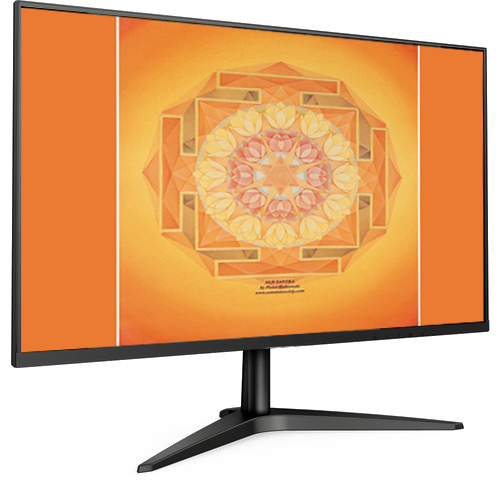
As there is a difference between mind and body, so there is between yantra and mantra. Yantra is the body or form of the deity (devata), whereas mantra is the mind, consciousness, spirit or name. Yantra is the external, visual expression through which the deity receives devotion.
When a yantra is adopted for worship and the energy is invoked in it, it becomes a symbolic representative of the deity and actually it becomes the deity when the person abandons his analytical, critical attitude and the energy circulates in higher centers. Every yantra becomes the dwelling place of the deity it represents. No idol or picture of a deity is as powerful as a yantra, because a yantra is composed of archetypical forms that are common to all existing phenomena. The very process of making a yantra is an archetypical activity that works with the encoding of the genes. During the process one moves from concrete reality to abstract truth.
The word yantra is used in two or more ways in Sanskrit. It comes from the root "yam", which means supporting or holding the essence of an object or concept. The syllable "tra" comes from "trana" or liberation from bondage. Yantra also means liberation from the cycle of birth and rebirth (moksha). As a tool, yantra is used to withdraw consciousness from the outer world, so as to help the student to go beyond the normal framework of mind to the altered states of consciousness known as turiya.
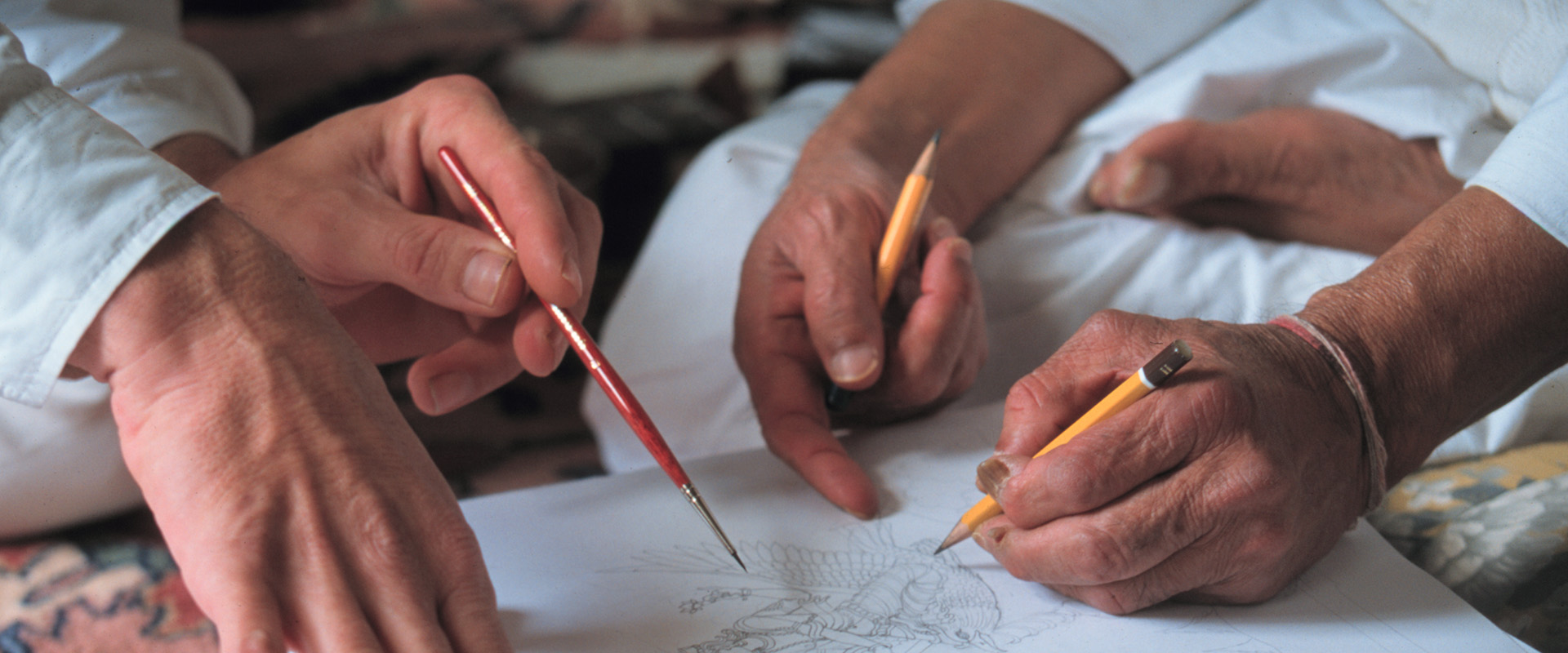
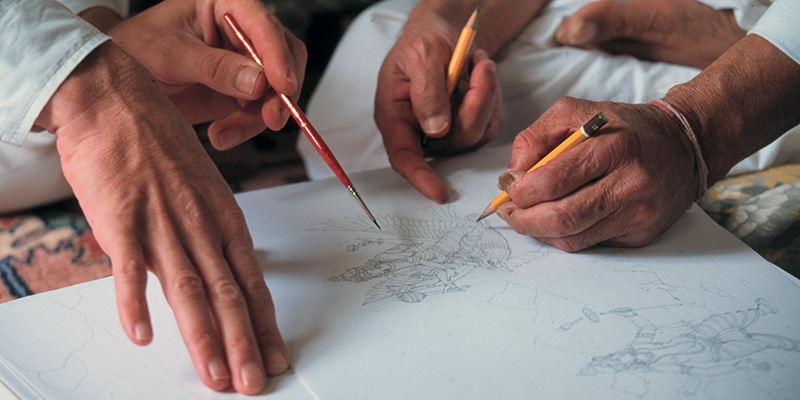
The act of drawing and painting yantras teaches the mind how to concentrate, how to be one-pointed. To some people this practice is fascinating and absorbing, while others might not find it as interesting as doing calligraphy or singing, but creating a yantra can yield a valuable lesson. Yantra drawing requires accuracy, exactness, discipline, concentration, neatness and patience. The geometrical forms of the yantra activate the right hemisphere, which is visual and nonverbal.
A black point on a white background forms the most precise and powerful yantra. But it is too simple to say that a yantra is a point on a surface which serves as a field for gazing. The point (bindu) is the center of the yantra. It signifies unity, the origin, the principle of manifestation and emanation. Although in theory a true point has no magnitude, but to have a point in concrete form, it is given the smallest practicable magnitude. This point is the first step in visualising the abstract, the formless. Meditation or concentration on this point brings the mind towards abstract concentration which is used as a means to self realization.
A circle is an extension of a point. With the radius of desire, the point draws a circle around itself and expands. However, the circle also creates an individual consciousness out of cosmic consciousness. After the point and the circle the triangle is the simplest form. Upward triangles draw the attention up and away from the world.
Yantras that represent any form of the divine mother are called Shakta Yantras. Yantras can also be related to Vishnu or Shiva. In most cases their forms are equal to some of the Shakta Yantras, but the colors differ. Architectural yantras are used for the ground plan of temples.
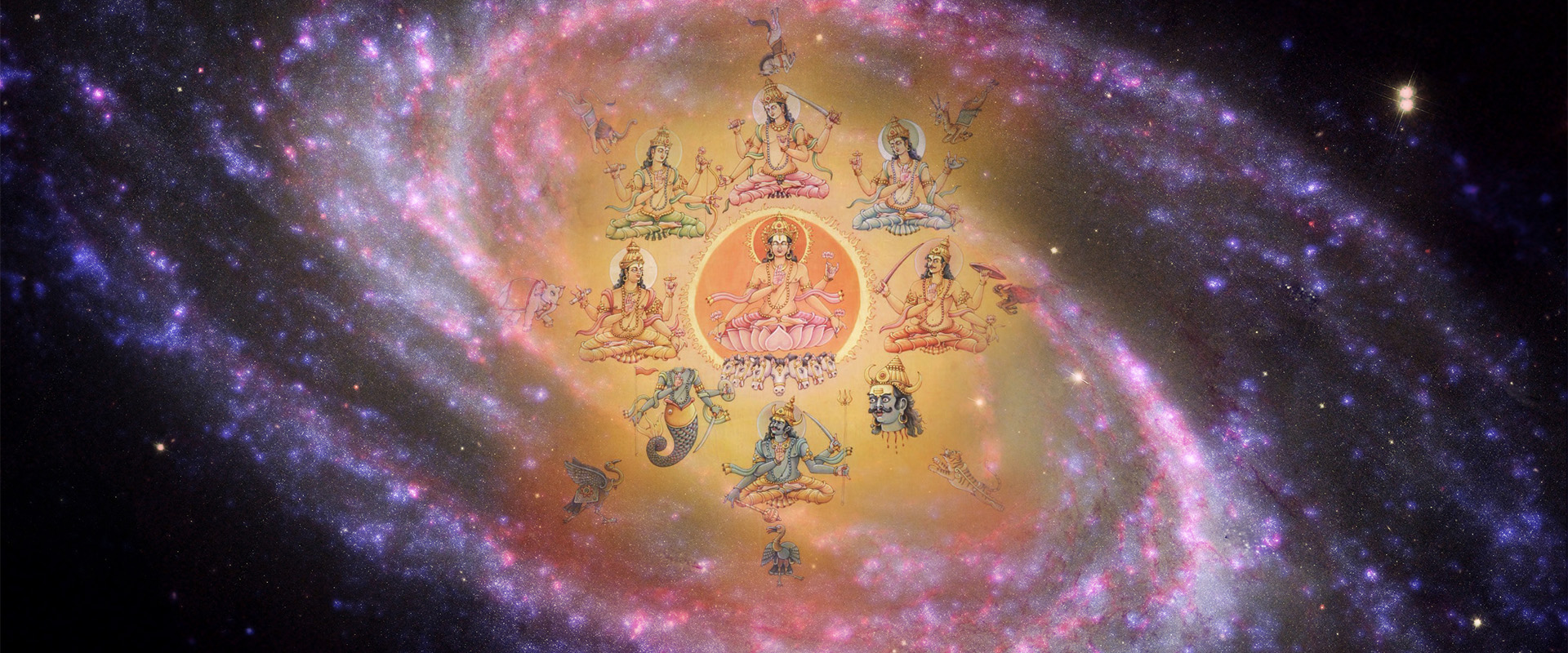
Astrological yantras are used in working with the energy of the nine planets. Numerical yantras are not composed of basic geometrical forms but of numbers. Some of them are used as talismans. When working with a yantra, a mantra is needed to invoke the vital life force (prana) of the particular deity.
Constructing a yantra requires imaginal thinking which involves the right hemisphere. The symbolic nature of yantras triggers the left hemisphere. Practitioners of tantra combine the universal pattern of the yantra with the cosmic sound of a mantra to achieve a higher state of awareness, in which individual being and universal being are one. The dichotomy of the hemispheres is resolved, both are calm.
Especially Westerners are more left hemisphere dominated and are deficient in right hemisphere education which causes some loss of imagination and of faith in higher values. Right hemisphere education through art, dance and music is needed to restore the balance. By coloring and drawing the geometrical yantra diagrams, based on the mathematical perfection of sages of the East, Westerners can make both their hemispheres work simultaneously and calmly, achieve faith and live in constant awareness.
 Guru Brahma, Guru Vishnu, Guru Devo Maheshwara, Guru Saksat Parabrahma, Tasmae Shri Guruve Namaha
 Sanatan Society is an international networking association of students of the late Harish Johari, joining efforts to promote his teachings of yoga philosophy, tantra, worship, art and love. Sanatan Society stands
for the original, universal and eternal truth, path or law of yoga.
Though it is Hindu in origin, Sanatan Society is not limited to any religion,
race, time or country, nor in fact to any particular organisation. More about Sanatan Society...
Sanatan Society is an international networking association of students of the late Harish Johari, joining efforts to promote his teachings of yoga philosophy, tantra, worship, art and love. Sanatan Society stands
for the original, universal and eternal truth, path or law of yoga.
Though it is Hindu in origin, Sanatan Society is not limited to any religion,
race, time or country, nor in fact to any particular organisation. More about Sanatan Society...